
CMOS vs sCMOS Microscope Cameras: How to Choose the Right Sensor?
For the past few years, camera imaging technology has been continuously advancing, improving resolution, sensitivity, frame rate and dynamic range to provide better imaging quality. Camera imaging relies on imaging sensors. Previously, CCD sensors were popular, while now CMOS sensors have gradually become the mainstream imaging sensors. With advancements of technology and manufacturing, sCMOS sensors with better imaging quality are used.
CCD and CMOS
The most microscope cameras use CCD or CMOS sensors.
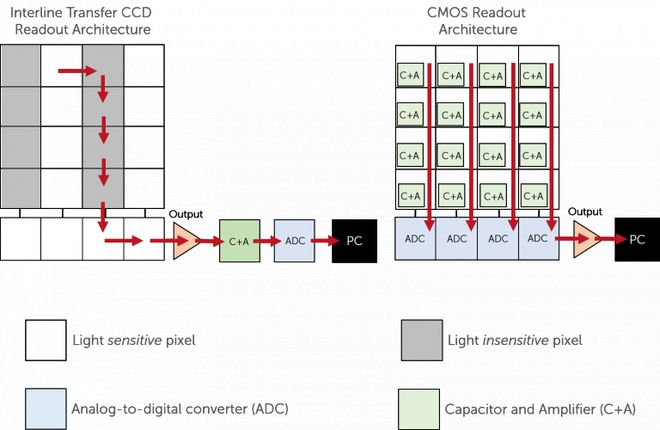
CCD imaging technology is a traditional imaging technology invented in 1970. CCD, Charge-Coupled Device, is a semiconductor device produced with super large scale integrated circuit technology. CCD converts optical information into electrical signals one by one pixel with a single readout node, one amplifier and one ADC. The sensor complexity of CCD is low, resulting in low noise, high sensitivity, large dynamic range and good imaging quality. Moreover, CCD technology has been in use for a long time and it is a mature technology, making it the mainstream imaging sensor in the past period of time. However, since CCD reads pixels one by one sequentially, it has high power consumption and limited frame rate, usually less than 30 fps. Additionally, due to the production using super large scale integrated circuit technology, the production cost of CCD is also relatively high.
CMOS is Complementary Metal Oxide Semiconductor. CMOS imaging technology is on the same principle of photoelectric conversion as CCD, but the difference is that each pixel in CMOS integrates an analog circuit and an amplifier, and there is an ADC on each column. Each ADC works simultaneously to read out the pixels of the entire column. This readout method has high integration and fast readout speed. However, due to the close distance of various components and circuits, there is significant signal interference, high noise and low sensitivity.
The power consumption of CMOS is lower than that of CCD, and the size is smaller than CCD. When the resolution of CCD and CMOS is same, the price of CMOS is cheaper than that of CCD, offering a significant price advantage. However, the quality of the image is not only determined by resolution, it also includes other parameters such as sensitivity, frame rate and dynamic range. Generally, the sensitivity and dynamic range of CMOS are both lower than those of CCD, while the frame rate of CMOS is higher than CCD. Overall, the image quality of CMOS is lower than that of CCD in the past period of time. However, as the noise reduction technology of CMOS circuits keeps improving, the imaging quality of CMOS is gradually approaching or even exceeding that of CCD now. At the same time, the advantages of CMOS, such as low power consumption, low cost and easy development, have made CMOS gradually replace CCD as the mainstream imaging sensor.
CMOS and sCMOS
Based on the structure of CMOS sensor, the manufacturing technology is developed and upgraded, resulting in scientific CMOS, as known as sCMOS. Nowadays, sCMOS has been widely applied in scientific research fields such as biology, physics, and astronomy.
sCMOS pointedly overcomes some shortcomings of CMOS, for example, reducing noise through multiple sampling on chip, increasing full-well capacity of pixels to improve sensitivity by adjusting the proportion of semiconductor materials, improving dynamic range through dual-channel readout and HDR synthesis technology, achieving seamless stitching to realize large sensor size, etc. So, sCMOS has lower noise, higher sensitivity, higher dynamic range and higher resolution than CMOS to improve image quality. The manufacturing technology of sCMOS is complex, so the price of sCMOS sensor is higher than that of CMOS.
So, when you buy a microscope camera, choosing CMOS or sCMOS sensor to get better image quality?
The quality of images under the microscope captured by the microscope camera is influenced by many parameters, such as resolution, sensitivity, dynamic range and frame rate. These parameters are interrelated and mutually restricted. According to different needs, prioritize different parameters when choosing a camera.
When to choose CMOS?
CMOS is suitable under bright environment and for fast imaging. Also, CMOS has high cost-effective.
For the following situations, you can preferentially choose CMOS sensor.
Basic applications
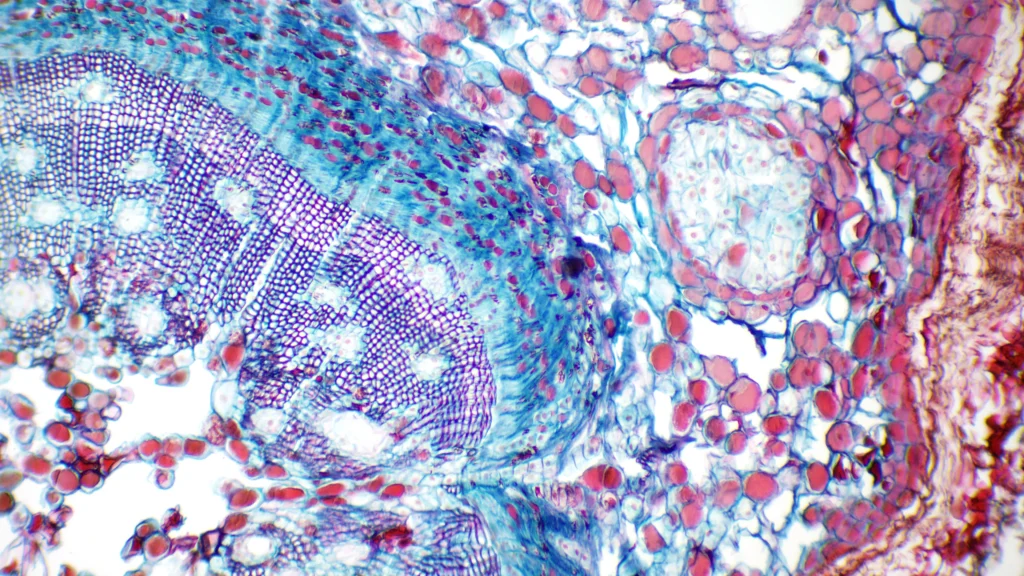
For bright field observations with low magnification, such as part inspection, real-time process monitoring, fixed slide observation and so on, a CMOS camera can meet the requirements. Select the appropriate resolution based on the size of the sample. Generally, a camera of 5MP to 10MP is sufficient for most microscopic observations. You can choose an HDMI CMOS camera, connected to a displayer, showing the image intuitively and clearly, and it is also convenient to show the observation results to others.
Pursuing high cost-effectiveness
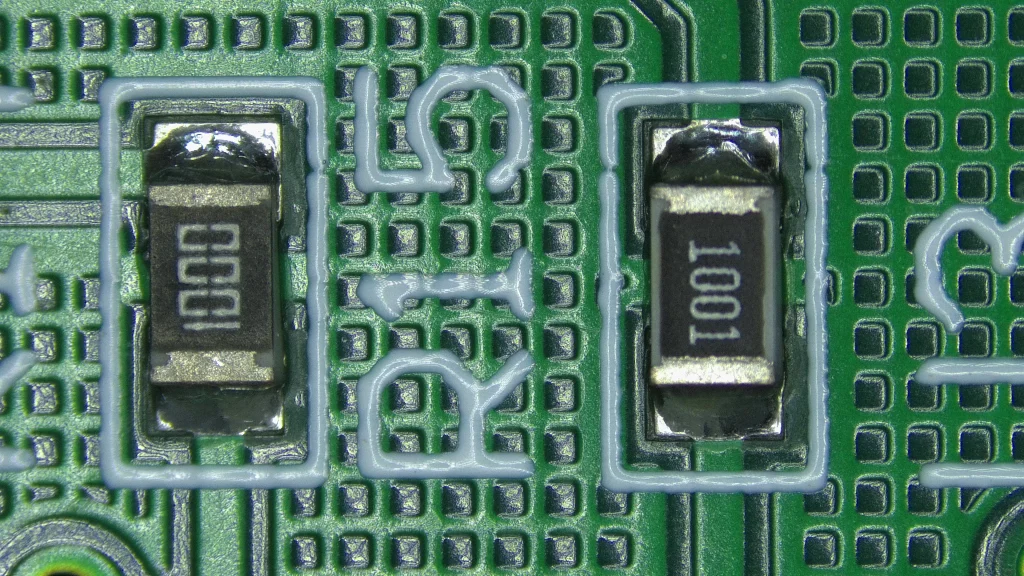
For applications that prioritize cost-effectiveness, such as teaching demonstrations, a CMOS camera is an ideal choice. CMOS cameras have high cost-performance, so large-scale purchases will not impose a heavy burden. Also, the operation of CMOS camera is simple and the imaging is fast. You can choose a CMOS camera with WIFI interface for real-time sharing with students. Students can observe on their personal devices, having the interactivity of teaching.
When to choose sCMOS?
The main advantages of sCMOS are high sensitivity, high dynamic range and a large sensor size, to get better image quality in different situations.
Weak fluorescence and multi-channel fluorescence observation
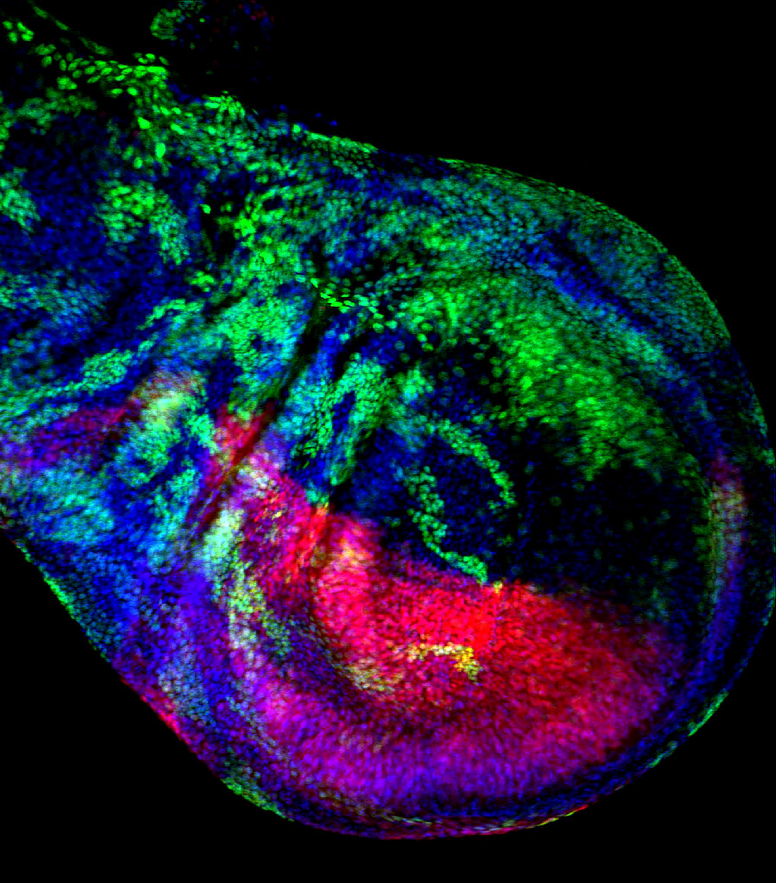
In dim environments and with weak light, high-sensitivity cameras are needed to capture the faint light. High sensitivity requirement needs a cooled sCMOS camera with high QE and low readout noise. High-sensitivity cameras can capture weak light signals. Cooling function helps reduce background noise, and low readout noise reduces the interference of fixed noise of the sensor, improving the SNR, signal-to-noise ratio.
For fluorescence imaging, especially weak fluorescence, such as GFP labeling and multiple fluorescence labeling, you need sCMOS cameras with high QE. Especially for confocal microscopes, the photon utilization rate of point scanning is low. A high-sensitivity camera that can convert more photons into electrons is particularly important.
High-speed dynamic scenes
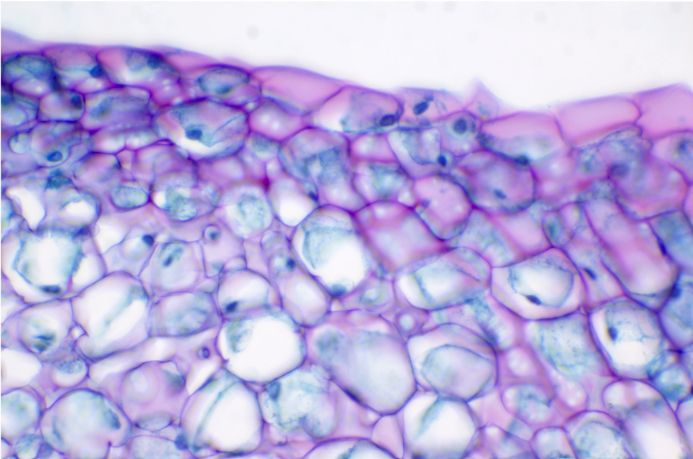
When shooting samples that are in high-speed motion or undergoing rapid condition changes, such as neural signal transmission, microfluidic research, material fracture or deformation, a global shutter sCMOS camera with high frame rate is a good choice. The global shutter prevents motion distortion and avoids jelly effect of rolling shutter, while the high frame rate ensures the output of smooth videos or the capture of high-speed dynamic moments. Frame rate refers to the number of complete images captured by a camera per second, determining the smoothness of the real-time image. If the frame rate is low, the photos captured during the moving may be blurry and the video may have obvious stuttering. Generally, the minimum frame rate to avoid unsmooth video actions is 30FPS. Also, a high-speed transmission interface, such as USB3.0, GigE or CameraLink, is needed to output images or videos quickly. If you need faster speed, ROI function or Binning function can also be used to increase the frame rate. The former speeds up the output speed by selectively imaging only a part of the image, sacrificing the field of view. While the latter increases the output speed by reducing the resolution.
Long-term observation of living cells
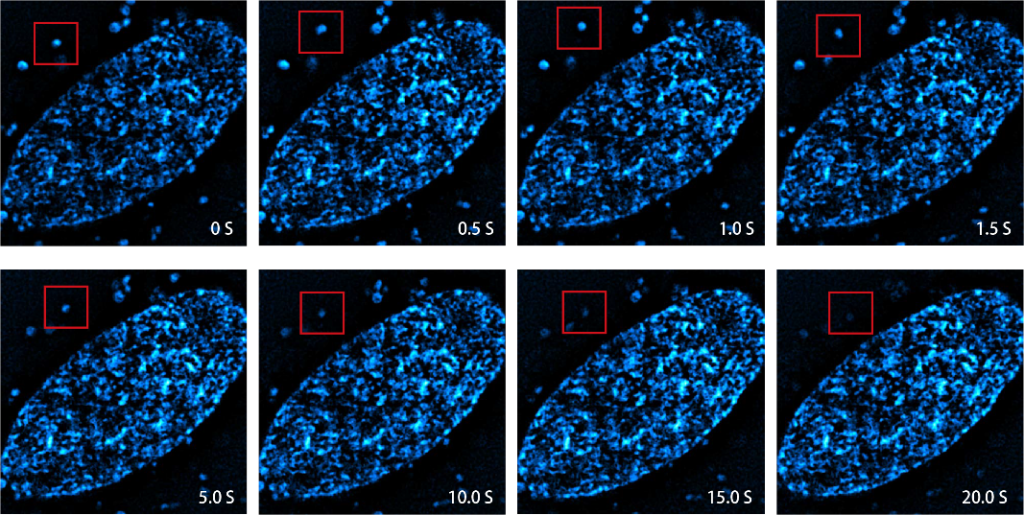
In situations where a camera needs to work for a long time to record a process, especially of live cells, such as recording the movement trajectories of proteins or observing the changes in chromosomes during cell division, a cooled sCMOS camera with short exposure time and high frame rate is a good choice. Short exposure time results in low phototoxicity and less damage to living cells, and it can also increase the output frame rate. High frame rate enables smooth recording of the movement process without delay and lag. During long-term working, the sensor of the camera will continue heating up, and the temperature increase of the sensor will lead to an significant increase in noise, resulting in low image quality. So, a cooling camera is necessary.
High-resolution requirements of micron-level or nanometer-level
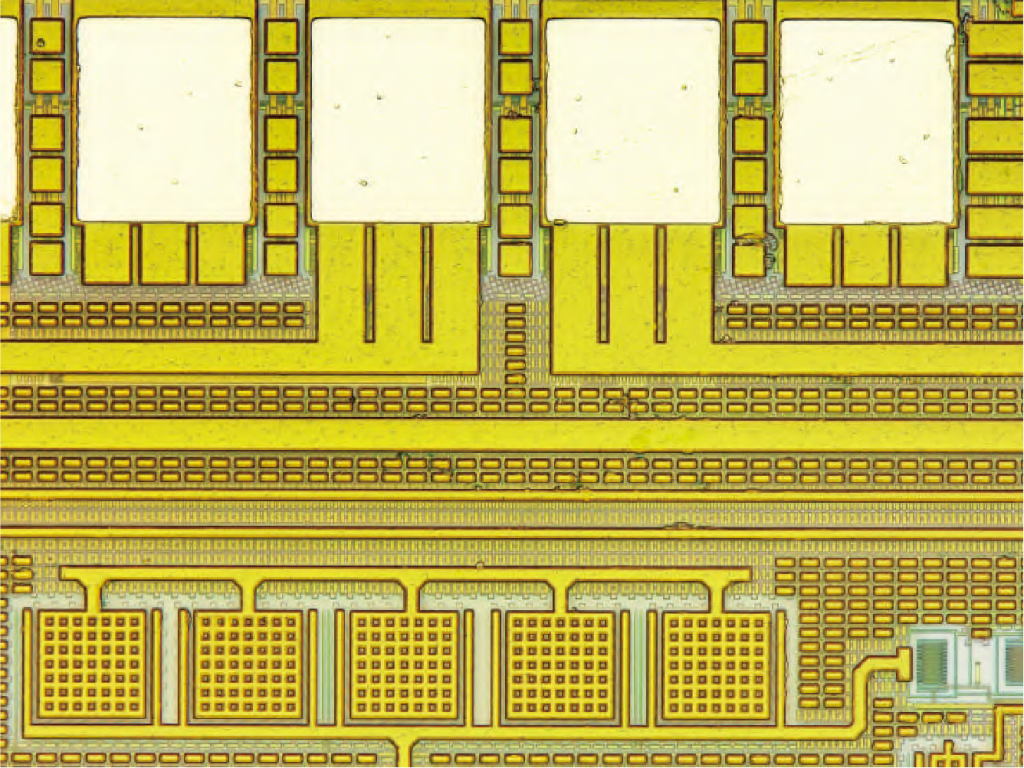
When observing tiny structures with high magnification and high NA (numerical aperture) objectives, such as for nanoscale structure characterization, semiconductor detection, crystal structure analysis and high-precision measurement and analysis, high-resolution cameras are required. You can choose sCMOS cameras with large sensor size and small pixel size, where the sensor size is larger than 1″ and the pixel size is 3.45μm or smaller, providing high resolution. sCMOS with large sensor size can also be used for wide-field observation, such as wafer inspection, allowing for a large field of view at one time to improve efficiency.
Observation of complex surfaces
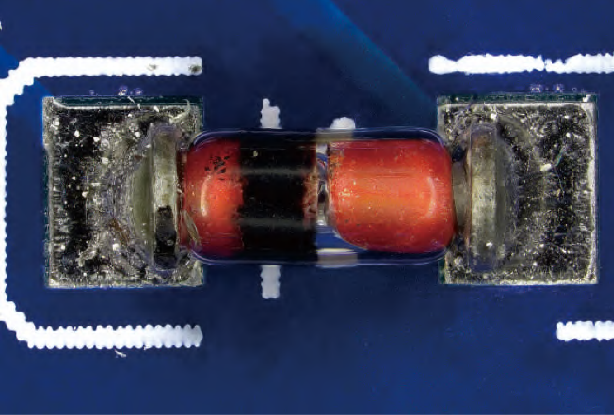
For complex surfaces with significant contrast between bright and dark areas, such as material surface analysis and metallographic examination. When the contrast between light and dark is large, a high dynamic range is required to ensure that both the bright areas and the shadow areas can be clearly seen. Dynamic range refers to the ratio of the highest and lowest signals that a sensor can simultaneously record. In images produced by sensors with low dynamic range, bright signals may be white or overexposed, while shadow areas may be black due to insufficient exposure, failing to show details of some area. You can choose an sCMOS camera with HDR mode to obtain images where the highlights have no reflective halo and the shadow areas can be clearly detailed.
FAQs
Is sCMOS always better than CMOS?
Not necessarily. If you don’t need very high parameters, CMOS can achieve excellent image quality with a high cost performance. During low magnification bright field observation and imaging, CMOS may achieve good imaging quality with a faster imaging speed. The main advantages of sCMOS are high sensitivity, high dynamic range and a large sensor size, to get better image quality in different situations.
Do all fluorescence imaging require sCMOS?
No, CMOS can also use for fluorescence imaging. However, if the fluorescence is weak, a more sensitive sensor such as BSI CMOS or sCMOS is needed to capture the weak fluorescence. The QE of BSI SCMOS sensor is higher than that of FSI CMOS since the sensor structure design is different, improving the sensitivity of the sensor.